
 Post by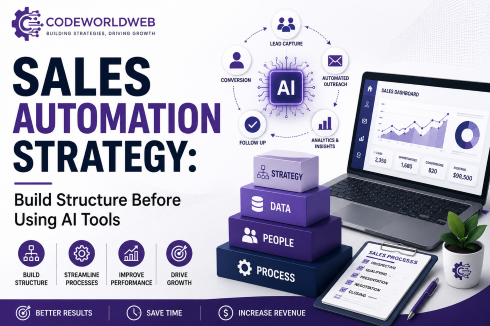
Why Structure Matters More Than Automation
Sales automation is powerful, but it cannot fix a broken system. If your sales pipeline is unclear, your data is inconsistent, or your team lacks defined workflows, automation will only amplify inefficiencies. AI tools rely heavily on clean data and structured processes to function effectively. Without these foundations, your investment in automation may lead to poor insights, missed opportunities, and wasted resources.
A structured sales system ensures that every lead is tracked, every interaction is recorded, and every stage of the customer journey is clearly defined. This clarity allows AI tools to analyze patterns, predict outcomes, and optimize performance accurately.
The Foundation of a Strong Sales Structure
Before implementing AI tools, businesses must establish a solid framework that supports automation. This includes:
1. Defined Sales Process
Create a step-by-step sales journey from lead generation to closing. Each stage should have clear objectives, actions, and criteria for progression.
2. Centralized CRM System
A Customer Relationship Management (CRM) system acts as the backbone of your sales structure. It ensures that all customer data is stored, organized, and accessible in one place.
3. Data Standardization
Consistent and accurate data is essential for AI to function properly. Standardize how information is collected, stored, and updated across your sales team.
4. Role Clarity and Accountability
Assign clear roles and responsibilities within your sales team. This avoids confusion and ensures smooth execution of the sales process.
5. Performance Metrics and KPIs
Define measurable goals such as conversion rates, response times, and deal sizes. These metrics help evaluate performance and guide optimization efforts.
The Role of AI in Sales Automation
Once a structured foundation is in place, AI tools can significantly enhance your sales efforts. They can:
- Automate repetitive tasks like follow-ups and data entry
- Provide predictive insights based on customer behavior
- Personalize communication at scale
- Improve lead scoring and prioritization
- Enhance customer engagement through chatbots and automation
However, these benefits are only achievable when AI is applied to a well-organized system. Otherwise, automation may lead to irrelevant messaging, poor targeting, and decreased customer satisfaction.
Common Mistakes Businesses Make
Many companies jump directly into automation without preparing their sales structure. Some common mistakes include:
- Implementing AI tools without a clear sales process
- Using multiple disconnected systems leading to data silos
- Ignoring data quality and consistency
- Over-automating without human oversight
- Failing to train teams on new technologies
Avoiding these pitfalls requires a strategic approach that prioritizes structure before automation.